
Dodge Journey: Draincock, radiator
Removal
DRAINCOCK
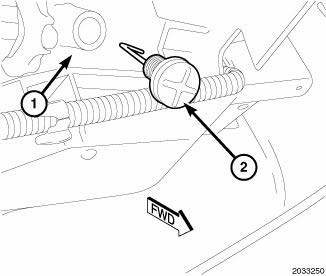
Fig. 65: DRAINCOCK & RADIATOR TANK
CAUTION: Use of pliers on draincock is not recommended. Damage may occur to radiator or draincock.
NOTE: It is not necessary to remove draincock during a routine coolant drain.
1. Remove belly pan (if equipped).
2. Drain the cooling system.
3. Open the draincock (2) by turning it counterclockwise until it stops.
4. Turn the draincock (2) back (clockwise) 1/8 turn.
5. Pull the draincock (2) from the radiator tank (1).
Installation
DRAINCOCK
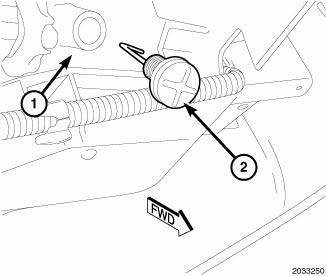
Fig. 66: DRAINCOCK & RADIATOR TANK
1. Align draincock (2) stem to radiator tank (1) opening.
2. Push draincock (2) into the radiator tank (1) opening.
3. Tighten the draincock (2) by turning clockwise until it stops.
4. Fill the cooling system.
5. Install belly pan (if equipped).
 Cooler, EGR
Description
Fig. 62: EGR COOLER
- EGR COOLER TO EGR VALVE TUBE
- MOUNTING SCREWS
- EGR COOLER MOUNTING SCREW
- MOUNTING SCREW
- EGR COOLER BODY
- EGR COOLER MOUNTING NUT
- EGR COOLE ...
 Fan, cooling
Description
Fig. 67: COOLING SYSTEM - OVERVIEW
- WINDSHIELD WASHER RESERVOIR
- UPPER SUPPORT
- FAN SHROUD
- FAN MOTOR
- LOWER RADIATOR HOSE
The radiator fan module includes a support ...
See also:
Inspection, adjustments
INSPECTION
Inspect the exhaust pipes, catalytic converters, muffler, and resonators for
cracked joints, broken welds and
corrosion damage that would result in a leaking exhaust system. Inspect the ...
Removal
Fig. 93: Accessory Drive Belt System - 2.7L
- GENERATOR
- IDLER/TENSIONER
1. Perform fuel pressure release procedure before attempting any repairs.
2. Disconnect negative cable from rem ...
Disassembly
HOUSING-AIR DISTRIBUTION
NOTE: The air distribution housing must be removed from the HVAC
housing and
disassembled for service of the blend-air and mode-air doors.
NOTE: LHD model with A/C ...
