
Dodge Journey: Accumulator
DESCRIPTION
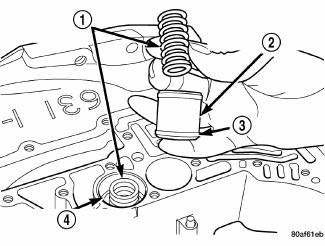
Fig. 238: Identifying Underdrive & Overdrive Accumulators
- - RETURN SPRING
- - UNDERDRIVE CLUTCH ACCUMULATOR
- - SEAL RING (2)
- - OVERDRIVE CLUTCH ACCUMULATOR
The 41TE underdrive, overdrive, low/reverse, and 2/4 clutch hydraulic circuits each contain an accumulator. An accumulator typically consists of a piston (2), seal rings (3) return spring(s) (1) and a cover or plug. The overdrive and underdrive accumulators are located within the transaxle case, and are retained by the valve body.
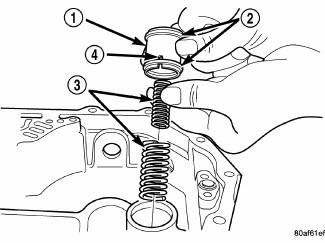
Fig. 239: Removing/Installing Low/Reverse Accumulator Return Springs
- - ACCUMULATOR PISTON
- - SEAL RINGS
- - RETURN SPRINGS
- - (NOTE NOTCH)
The low reverse accumulator (1) is also located within the transaxle case, but the assembly is retained by a cover and a snap-ring.
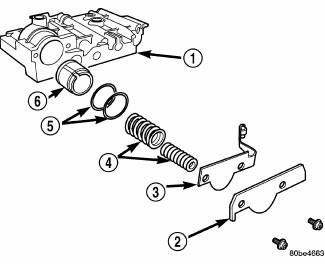
Fig. 240: Identifying 2/4 Accumulator Assembly
- - VALVE BODY
- - RETAINER PLATE
- - DETENT SPRING
- - VALVE BODY
- - RETAINER PLATE
- - DETENT SPRING
The 2/4 accumulator is located in the valve body (1) . It is retained by a cover and retaining screws.
OPERATION
The function of an accumulator is to cushion the application of a frictional clutch element. When pressurized fluid is applied to a clutch circuit, the application force is dampened by fluid collecting in the respective accumulator chamber against the piston and spring(s). The intended result is a smooth, firm clutch application
 Schematics and diagrams
40/41TE - WITH VARIABLE LINE PRESSURE
Fig. 181: Identifying Line Pressure - Park & Neutral
Fig. 182: Identifying Line Pressure - Reverse
Fig. 183: Identifying Line Pressure - First Gear ( ...

See also:
Operation
Fig. 427: Identifying Torque Converter Fluid Pressure
Operation
- APPLY PRESSURE
- THE PISTON MOVES SLIGHTLY
FORWARD
- RELEASE PRESSURE
- THE PISTON MOVES SLIGHTLY
REARWARD
The co ...
DRIVING ON SLIPPERY SURFACES
Acceleration
Rapid acceleration on snow covered, wet, or other slippery
surfaces may cause the front wheels to pull erratically
to the right or left. This phenomenon occurs when
there is a differe ...
Disassembly
Fig. 10: Drain Plug
1. Remove drain plug (1) and allow transmission oil to drain.
Fig. 11: Back-Up Lamp Switch
2. Remove backup lamp switch (1).
Fig. 12: Shift Cable Bracket
3. Remove the b ...
