
Dodge Journey: Description, Operation
DESCRIPTION
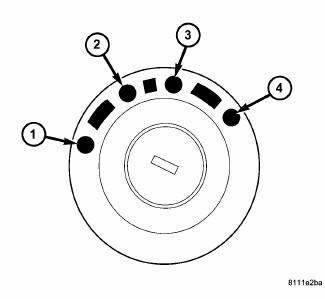
Fig. 418: Identifying Ignition Key/Switch Positions
- - LOCK
- - ACC
- - ON
- - START
The Brake Transmission Shifter/Ignition Interlock (BTSI) is a solenoid operated system that prevents the transmission gear shifter from being moved out of PARK without a driver in place.
OPERATION
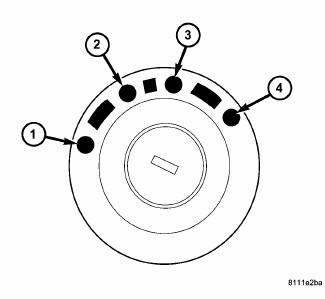
Fig. 419: Identifying Ignition Key/Switch Positions
- - LOCK
- - ACC
- - ON
- - START
The Brake Transmission Shifter/Ignition Interlock (BTSI) is engaged whenever the ignition switch is in the LOCK or ACC position. An additional electrically activated feature will prevent shifting out of the PARK position unless the brake pedal is depressed at least one-half inch. When the key is in the ON position and the brake pedal is depressed, the shifter is unlocked and will move into any position.
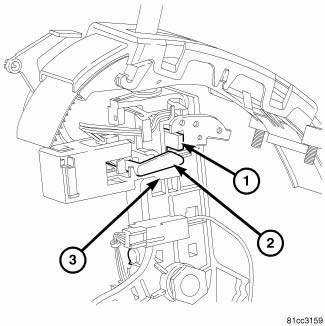
Fig. 420: Identifying Rotating Arm, Blocking Arm, & Shifter Gate Pin
When service brake pedal is not depressed the solenoid rotating arm (2) is free to rotate. The shifter gate pin (1) hits the blocking arm (3) and is prevented from moving from park.
When service brake is applied the rotating arm (2) is prevented from rotating by magnetic force within the solenoid. The shifter gate pin (1) pushes the rotating arm (2) and blocker arm (3) allowing the shifter to move out of park.

 Diagnosis and testing
SHIFT INTERLOCK SYSTEM
Fig. 421: Identifying Ignition Key/Switch Positions
- LOCK
- ACC
- ON
- START
The Shifter Response Table describes the normal operation of the
Brak ...
See also:
MEDIA CENTER 130 (RES/RSC) — AM/FM STEREO RADIO WITH CD PLAYER (MP3 AUX
JACK) AND SIRIUS RADIO
NOTE: The radio sales code is located on the lower right
side of the radio faceplate.
RES/RSC Radio
Operating Instructions — Radio Mode
NOTE: The ignition switch must be in the ON or ACC
posi ...
DRIVING THROUGH WATER
Driving through water more than a few inches/
centimeters deep will require extra caution to ensure
safety and prevent damage to your vehicle.
Flowing/Rising Water
WARNING:
Do not drive on, or cr ...
Installation
Fig. 186: Rear Heater AC Housing Removal/Installation
NOTE: MTC rear heater-A/C system shown. ATC system similar.
1. Position the rear heater-A/C housing (1) into the vehicle and align the
...
