
Dodge Journey: Heater performance
Before performing the following tests, see COOLING for the procedures to check the engine coolant level and flow, engine coolant reserve/recovery system operation, accessory drive belt condition and tension, radiator air flow and the fan drive operation.
WARNING: Do not remove radiator cap when engine is hot. Failure to follow this instruction may result in serious injury.
If vehicle has been run recently, wait 15 minutes before removing the radiator cap. Place a rag over the cap and turn it to the first safety stop. Allow pressure to escape through the overflow tube. When the system pressure stabilizes, remove the cap completely.
MAXIMUM HEATER OUTPUT
Engine coolant is delivered to and from the heater core through two heater hoses. With the engine idling at normal operating temperature, set the temperature control to the full hot position, the mode control to the floor position, and the blower motor control to the highest speed position. Using a test thermometer, check the temperature of the air being discharged at the front floor outlets. Compare the test thermometer reading to the Heater Temperature Reference chart.
HEATER TEMPERATURE REFERENCE

See COOLING if the heater outlet air temperature is below the minimum specification. Both of the heater hoses should be hot to the touch. The coolant return heater hose should be slightly cooler than the coolant supply heater hose. If the return hose is much cooler than the supply hose, locate and repair the engine coolant flow obstruction in the cooling system.
OBSTRUCTED COOLANT FLOW
Possible locations or causes of obstructed coolant flow are as follows:
- Low coolant level
- Inoperative water pump
- Inoperative thermostat
- Pinched or kinked heater hoses
- Improper heater hose routing
- Plugged heater hoses or supply and return ports at the cooling system connections
- Plugged heater core
If proper coolant flow through the cooling system is verified, and heater outlet air temperature is low, a mechanical problem may exist.
MECHANICAL PROBLEMS
Possible causes of insufficient heat due to mechanical problems are as follows:
- Obstructed cowl air intake
- Obstructed heater system outlets
- Inoperative engine thermostat
- Inoperative blower motor system
- Inoperative A/C-heater control
- Inoperative blend door actuator(s)
- Inoperative, obstructed or improperly installed blend-air door(s)
TEMPERATURE CONTROL
If the heater outlet air temperature cannot be adjusted with the temperature control on the A/C-heater control, the following could require service:
- Inoperative A/C-heater control
- Inoperative blend door actuator(s)
- Inoperative, obstructed or improperly installed blend-air door(s)
- Improper engine coolant temperature
SPECIFICATIONS
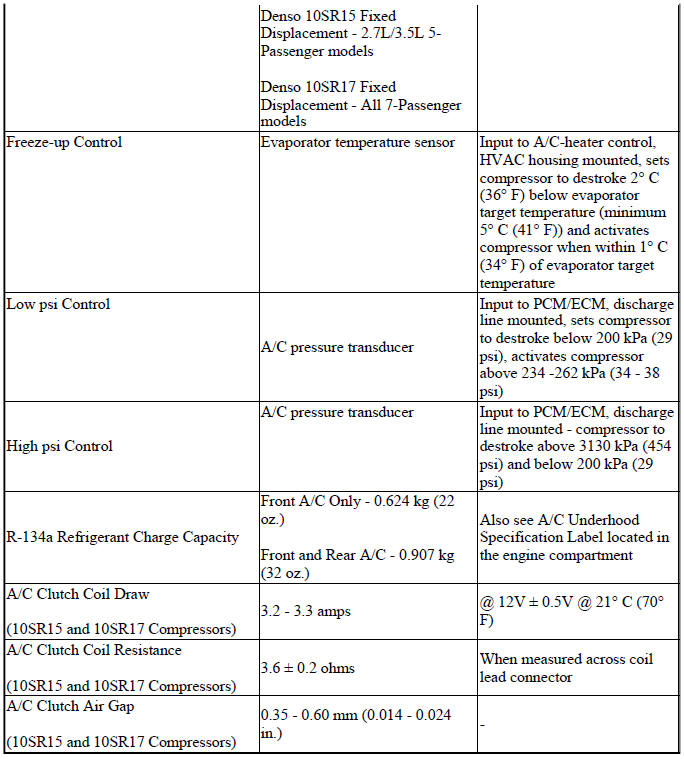
A/C SYSTEM

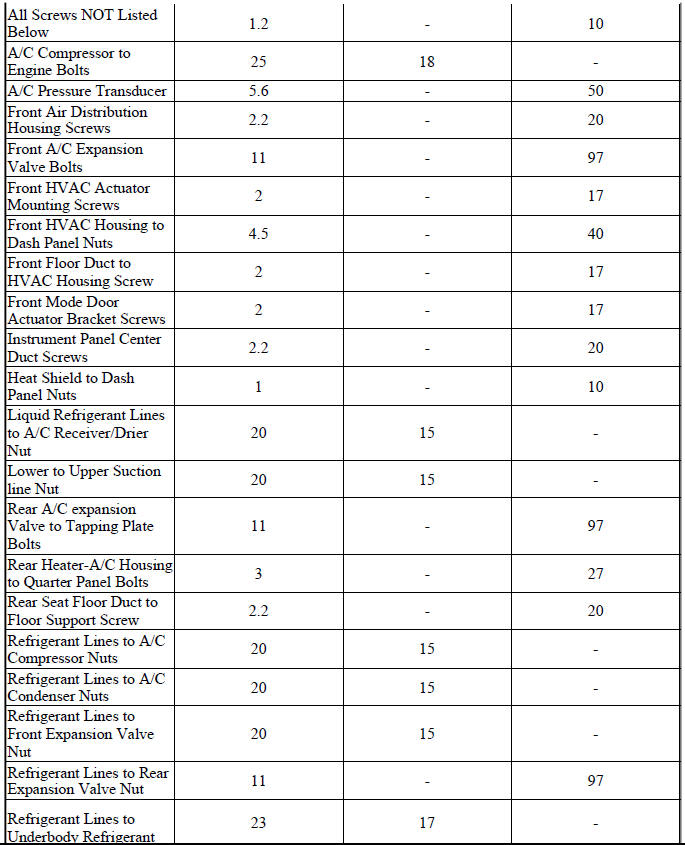
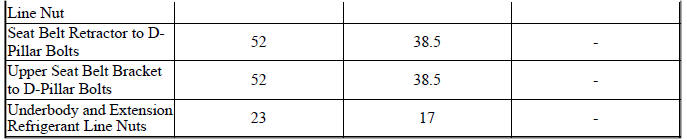
FASTENER TORQUE

SPECIAL TOOLS
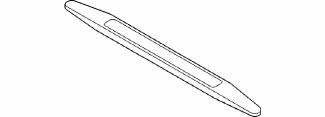
Fig. 4: Trim Stick C-4755
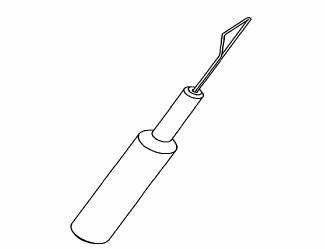
Fig. 5: Back Probe Tool 6801
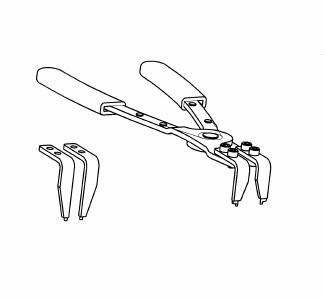
Fig. 6: Pliers, A/C Snap Ring 9764
 A/C Performance
The A/C system is designed to provide the passenger compartment with low
temperature and low humidity air.
The A/C evaporator, located in the HVAC housing is cooled to temperatures near
the fre ...
 Controls, front
...
See also:
ELECTRONIC SPEED CONTROL — IF EQUIPPED
When engaged, the Electronic Speed Control takes over
the accelerator operation at speeds greater than 25 mph
(40 km/h).
The Electronic Speed Control lever is located on the right
side of the stee ...
Switch, defogger, rear
DESCRIPTION
Fig. 5: EBL Switch (MTC)
NOTE: Manual tri-zone temperature A/C-heater control shown in
illustration. Other A/Cheater
controls similar.
The momentary push-button swi ...
Bearing(s), connecting rod
Standard Procedure
CONNECTING ROD AND BEARING FITTING
CONNECTING ROD BEARING
Fig. 166: Checking Connecting Rod Bearing Clearance-Typical
Fit all connecting rods on one bank until complete.
Th ...
