
Dodge Journey: Insulator, engine mount, rear
Removal
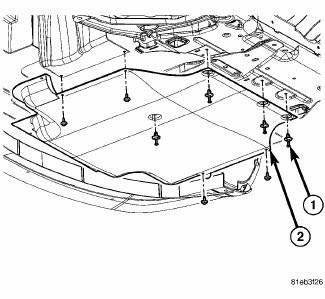
Fig. 234: Belly Pan
1. Remove throttle body air inlet hose and air cleaner housing assembly.
2. Raise the vehicle.
3. Remove the belly pan (2).
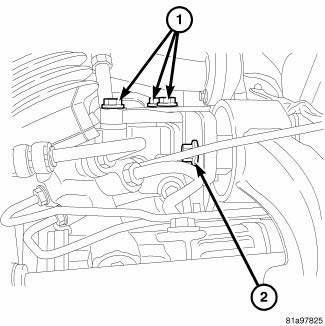
Fig. 235: Identifying Rear Mount Bracket-To-Transaxle Case Bolts
4. Remove three vertical bolts (1) attaching rear mount bracket to transaxle case.
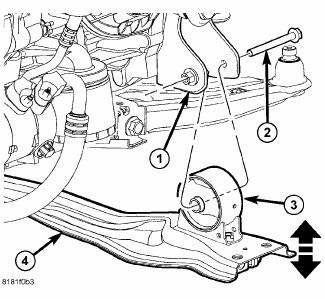
Fig. 236: Front Engine Mount Through Bolt
5. Loosen the front mount through bolt (2).
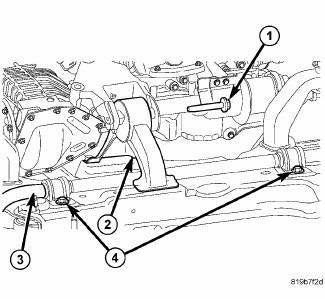
Fig. 237: Rear Engine Mount & Transaxle Bracket
6. Remove rear mount bracket through bolt (1).
7. Remove rear mount bracket from transaxle case.
8. Remove rear isolator to suspension crossmember attaching bolts.
9. Remove rear isolator (2).
Installation
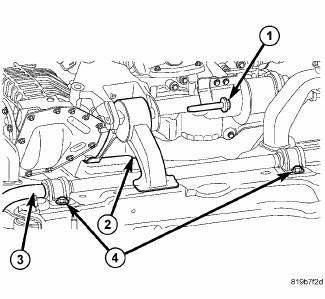
Fig. 238: Rear Isolator On Suspension Crossmember
1. Position rear isolator (2) on suspension crossmember and loosely install bolts.
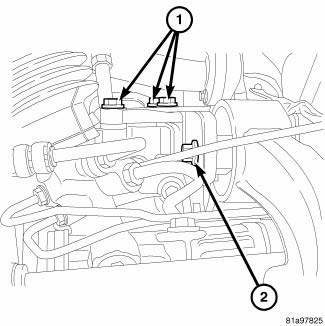
Fig. 239: Identifying Rear Mount Bracket-To-Transaxle Case Bolts
2. Position rear mount bracket on transaxle and install bolts (1). Tighten bolts to 95 N.m (70 ft. lbs.).
3. Tighten rear isolator to suspension crossmember bolts to 61 N.m (45 ft. lbs.).
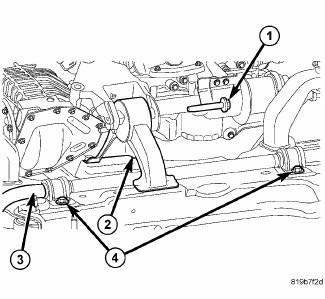
Fig. 240: Rear Isolator On Suspension Crossmember
NOTE: Be sure the weight of the engine is static and in rest position.
4. Install rear mount bracket to rear isolator through bolt (1) and tighten to 75 N.m (55 ft. lbs.).
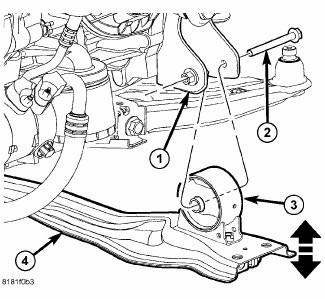
Fig. 241: Front Engine Mount Through Bolt
5. Tighten front mount through bolt (2) to 75 N.m (55 ft. lbs.).
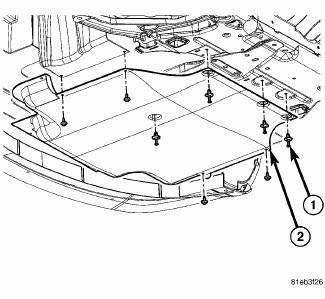
Fig. 242: Belly Pan
6. Install the belly pan (2).
7. Install throttle body air inlet hose and air cleaner housing assembly.
 Insulator, engine mount, left
Removal
Fig. 228: Belly Pan
1. Disconnect and isolate the negative battery cable.
2. Remove throttle body air inlet hose and air cleaner housing assembly.
3. Remove the belly pan (2).
...
 Insulator, engine mount, right
Removal
Fig. 243: Belly Pan
1. Remove the belly pan (2).
Fig. 244: Right Engine Mount
2. Lower vehicle. Remove the load on the engine motor mounts by carefully
supporting the engine assembly ...
See also:
Damper, vibration
Removal
Fig. 196: Vibration Damper - Removal
- SPECIAL TOOL 8454 PULLER
- SPECIAL TOOL 8194 INSERT
1. Disconnect negative battery cable.
2. Remove right front wheel and belt splash shie ...
Switch, heated seat
DESCRIPTION
Fig. 10: Locating Accessory Switch Bank Module
Two heated seat switches are located in the center stack of the instrument
panel. The switches are located on the
outer edges of the A ...
Standard procedure
BRAKE ROTOR MACHINING
NOTE: Refacing the rotor is not required each time the brake pads are
replaced, only
when the need is foreseen.
Any servicing of the rotor requires extreme care to ma ...
