
Dodge Journey: Disassembly
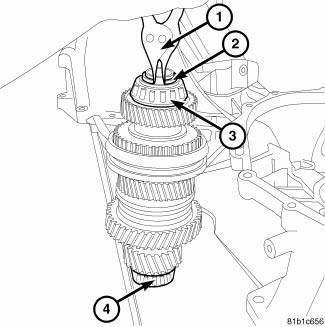
Fig. 229: Snap Ring At Output Shaft
1. Using Snap Ring Pliers (1) remove the snap ring (2) from the output shaft # 2.
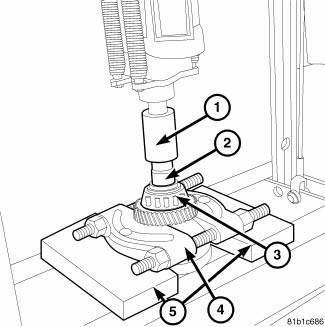
Fig. 230: Bearing From Cluster Shaft
2. Using a press, blocks, Bearing Splitter P-334 and an appropriate spacer (2) press sixth gear and case side bearing (3) from shaft.
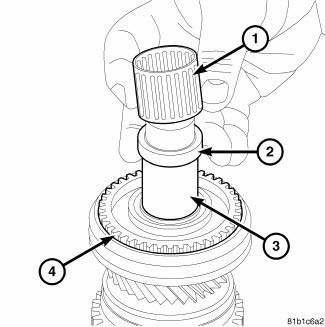
Fig. 231: Bearing Cage & Spacer Cluster
3. Remove sixth needle bearing cage (1) and spacer (2) from output shaft # 2 (3).
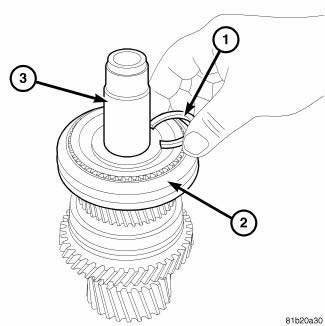
Fig. 232: Snap Ring At Output Shaft #2
4. Remove the snap ring (1) from the output shaft # 2 (3).
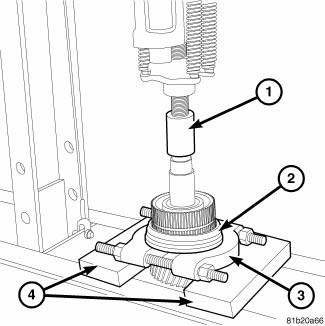
Fig. 233: Fifth Gear & Five/Six Synchronizer
5. Use Bearing Splitter P-334 (3), Blocks (4) and a press remove fifth gear and five/six synchronizer (2).
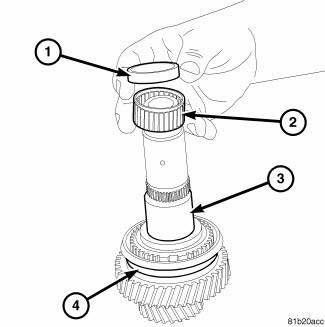
Fig. 234: #2 Bearing & Spacer
6. Remove fifth needle bearing cage (2) and spacer (1) from output shaft (3).
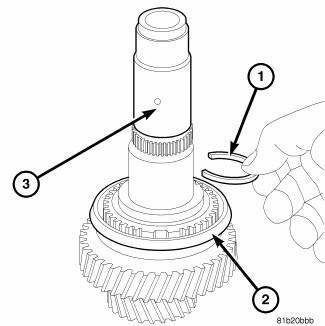
Fig. 235: Output Shaft & C-Clip
7. Remove the C-clip (1) from the output shaft (3).
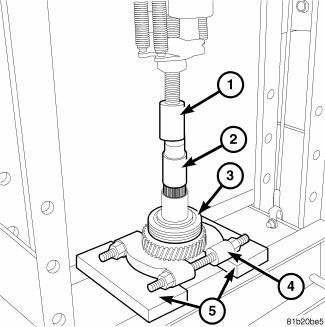
Fig. 236: Output Shaft #2 & Reverse Synchronizer
8. Use Bearing Splitter P-334 (4), Blocks (5) and a press to remove reverse gear and reverse synchronizer (3) from the output shaft # 2.
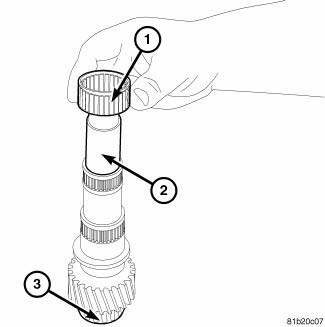
Fig. 237: Output Shaft #2 & Needle Bearing
9. Remove the reverse needle bearing (1) from the output shaft # 2 (2).
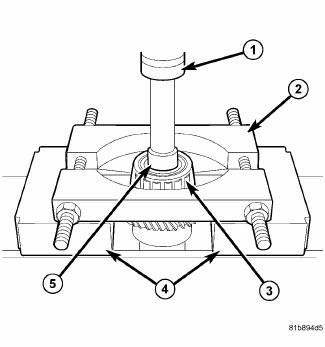
Fig. 238: Output Shaft & Bellhousing Side Bearing
10. Using a Press (1) and Splitter 1130 (2) to remove the bellhousing side bearing (3) from the output shaft # 2(5).

 Assembly
Fig. 239: Output Shaft #2 & Needle Bearing
1. Install the reverse needle bearing (1) onto the output shaft # 2 (2).
Fig. 240: Synchronizer
NOTE: Pay attention to the direction when inser ...
See also:
HAZARD WARNING FLASHER
The Hazard Warning flasher
switch is located in the
instrument panel switch bank, above the climate controls.
Press the switch to turn on the Hazard Warning
flasher. When the switch is activated, ...
Installation
CAUTION: Be certain to adjust the refrigerant oil level when
servicing the A/C
refrigerant system. Failure to properly adjust the refrigerant
oil level will prevent the A/C system fro ...
Horn
REMOVAL
Fig. 1: Removing / Installing Horns
1. Disconnect and isolate the negative battery cable.
2. Remove the push pin type retainers along the top of the grille assembly and
position the g ...
