
Dodge Journey: Fluid
STANDARD PROCEDURE
FLUID LEVEL CHECKING
The fluid required for this transaxle is Mopar ATF+4 (Automatic Transmission Fluid). Use of improper or substitute fluids can cause shift problems and/or transaxle failure.
1. Insure the vehicle is level, remove the fill plug and add fluid until the fluid just starts to trickle out.
FLUID DRAIN AND FILL
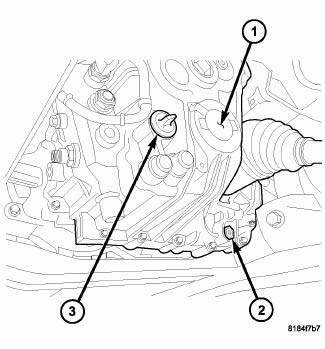
Fig. 174: Drain Plug
NOTE: The fluid required for this transaxle is Mopar ATF+4 (Automatic Transmission Fluid). Use of improper or substitute fluids can cause shift problems and/or transaxle failure.
1. Raise vehicle on hoist.
2. Obtain suitable fluid collection container and place under transaxle.
3. Remove transaxle drain plug (2). Allow fluid to drain into container until empty.
4. Install the drain plug (2) with a new gasket and tighten to 39 N.m (29 ft. lbs.).
5. Remove transaxle rubber fill plug (3).
6. Add the appropriate amount of transaxle fluid to the transaxle.
7. Install the transaxle rubber fill plug (3).
 Differential, transaxle
DESCRIPTION
Fig. 166: Differential Assembly
- RING GEAR
- PINION SHAFT
- DIFFERENTIAL CASE
- PINION GEAR
- SIDE GEAR
The BG6 differential is a conventional open design, and is integr ...
 Input shaft, transmission
DISASSEMBLY
Fig. 175: Snap Ring At Input Shaft
1. Remove the snap ring (2) that retains the input shaft bearing and sixth
gear to the shaft.
Fig. 176: Press Bearing From Input Shaft
2. Using ...
See also:
Installation
BEVERAGE COOLER
NOTE: LHD model shown in illustrations. RHD model similar.
OUTLET
Fig. 149: Beverage Cooler Outlet & Hose
NOTE: If the beverage cooler cold air supply hose falls back ...
Removal
2.4L
Fig. 59: Identifying Ignition Coil Electrical Connectors
NOTE: Prior to removing coil, spray compressed air around coil top to
make sure no
dirt drops into the spark plug tube.
1. ...
Installation
Fig. 28: Sealing Boot Installation on Interconnecting Shaft
- SEALING BOOT
- RAISED BEAD IN THIS AREA OF SEALING BOOT
- GROOVE
- INTERCONNECTING SHAFT
1. Slide new sealing boot clamp (2 ...
