
Dodge Journey: Switch, defogger, rear
DESCRIPTION
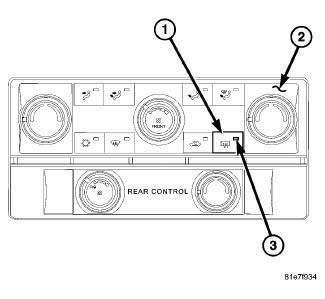
Fig. 5: EBL Switch (MTC)
NOTE: Manual tri-zone temperature A/C-heater control shown in illustration. Other A/Cheater controls similar.
The momentary push-button switch (1) for the rear window defogger (EBL) system is located in the A/C-heater control (2) in the center of the instrument panel. An amber indicator (3) will illuminate to indicate when the EBL system is turned on.
OPERATION
An amber indicator will illuminate when the rear window defogger switch is activated. When activated, the switch sends a request signal to the totally integrated power module (TIPM) to energize the internal EBL high side driver to provide battery current to the rear window defogger grid lines and to the heated side view mirrors, when equipped.
NOTE: The EBL system turns off automatically after 10 minutes of initial operation.
Each following activation cycle of the EBL system will last 5 minutes.
The rear window defogger switch is diagnosed using a scan tool. The rear window defogger switch and indicator cannot be adjusted or repaired. The A/C-heater control must be replaced if the rear window defogger switch or indicator is inoperative or damaged.
 Grid, defogger, rear
STANDARD PROCEDURE
GRID LINE AND TERMINAL REPAIR
WARNING: Materials contained in the Repair Kit (Part Number
04549275) may cause
skin or eye irritation. The kit contains epoxy resin an ...
 Heated Mirrors
DESCRIPTION
Fig. 1: Rear Window Defogger (EBL) System
NOTE: Manual tri-zone temperature A/C-heater control shown. Other
A/C-heater
controls similar.
When equipped, the heated mirror sys ...
See also:
Removal, Installation
REMOVAL
Fig. 298: Identifying Transmission Connectors
- SOLENOID PACK CONNECTOR
- INPUT SPEED SENSOR CONNECTOR
- OUTPUT SPEED SENSOR CONNECTOR
- TRANSMISSION RANGE SENSOR CONNECTOR
...
Removal
BULB
Each rear lamp unit for this vehicle consists of two pieces. An outer rear
lamp unit that is secured at the rear of
each quarter panel includes bulbs for the park (or tail) lamps, the brake ( ...
Removal
1. Raise and support the vehicle.
NOTE: Perform 2 through 5 on each side of the vehicle to complete pad
set
removal.
Fig. 117: TIRE AND WHEEL MOUNTING
2. Remove the wheel mounting nuts ...
