
Dodge Journey: Manifold, exhaust, front
Removal
1. Disconnect negative battery cable.
2. Remove the engine cover.
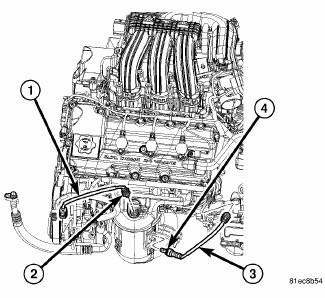
Fig. 295: Oxygen Sensors
3. Disconnect and remove oxygen sensors (2) and (4).
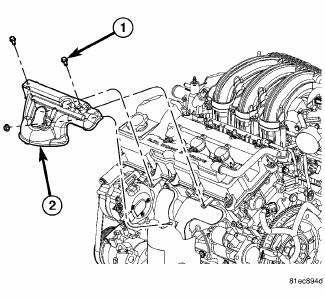
Fig. 296: Upper Maniverter Heat Shield
4. Remove the upper maniverter heat shield (2).
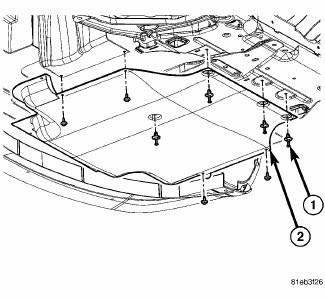
Fig. 297: Belly Pan
- - belly pan fasteners
- - belly pan
5. Remove the belly pan (2).
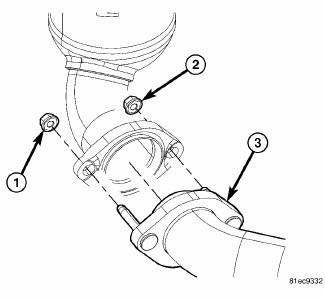
Fig. 298: Front Maniverter-To-Cross Under Fasteners
6. Remove the front maniverter-to-crossunder fasteners (1) and (2).
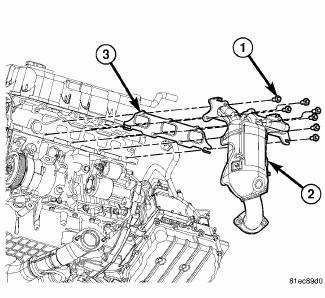
Fig. 299: Front Exhaust Maniverter Attaching Bolts
7. Remove front exhaust maniverter attaching bolts (1) and remove the front maniverter (2).
Inspection
1. Inspect exhaust manifolds for damage or cracks.
2. Check manifold flatness.
3. Inspect the exhaust manifold gasket for obvious discoloration or distortion.
4. Check distortion of the cylinder head mounting surface with a straightedge and thickness gauge.
Installation
1. Clean gasket mounting surfaces.
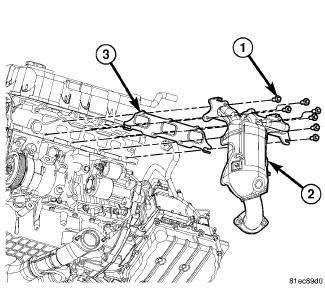
Fig. 300: Front Exhaust Maniverter Attaching Bolts
2. Install a new gasket (3), the front maniverter (2), and the front exhaust maniverter attaching bolts (1).
Tighten bolts to 23 Nm (17 ft. lb).
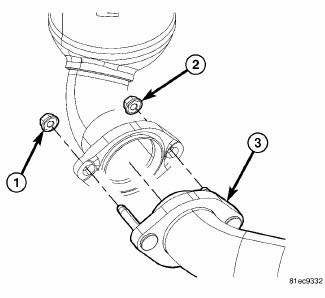
Fig. 301: Front Maniverter-To-Cross Under Fasteners
3. Install the front maniverter-to-crossunder fasteners (1) and (2). Tighten to 27 Nm (20 ft. lb.).
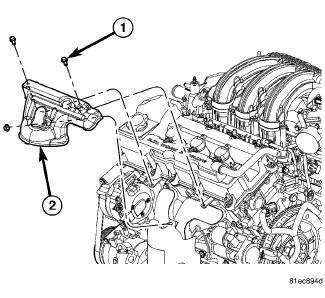
Fig. 302: Upper Maniverter Heat Shield
4. Install the upper maniverter heat shield (3) and the heat shield fasteners (1) and (2). Tighten fasteners to 12 Nm (106 in. lb.).
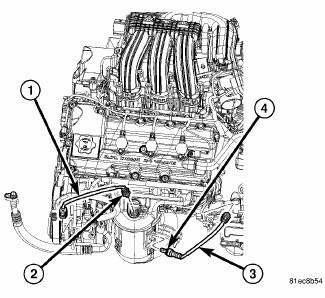
Fig. 303: Oxygen Sensors
5. Install the oxygen sensors (2) and (4). 41 Nm (30 ft. lbs.)
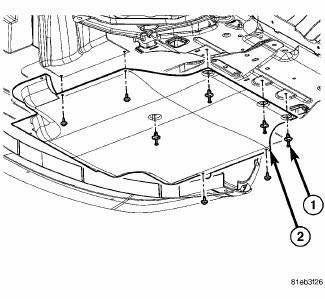
Fig. 304: Belly Pan
- - belly pan fasteners
- - belly pan
6. Install the belly pan (2).
7. Install the negative battery cable.
8. Install the engine cover.
 Manifold, exhaust, crossover
Removal
Fig. 287: Belly Pan
- belly pan fasteners
- belly pan
1. Remove the belly pan (2).
Fig. 288: Exhaust Extension Pipe
2. Remove the fasteners (1), and remove the exhaust extensio ...
 Manifold, exhaust, rear
Removal
Fig. 305: Belly Pan
- belly pan fasteners
- belly pan
1. Remove the belly pan (2).
Fig. 306: Oxygen Sensors
2. Remove the oxygen sensors (2) and (4).
Fig. 307: Exhaust Gas R ...
See also:
Removal
Fig. 35: Removing/Installing Halfshaft Nut
NOTE: Rear suspension and drivetrain design require this procedure to
be performed
on a "drive-on" hoist, as the front and rear suspensi ...
Engine diagnosis
ENGINE DIAGNOSIS - INTRODUCTION
Engine diagnosis is helpful in determining the causes of malfunctions not
detected and remedied by routine
maintenance.
These malfunctions may be classified as e ...
LIGHTS
Multifunction Lever
The multifunction lever controls the operation of the
headlights, parking lights, turn signal lights, instrument
panel lights, instrument panel light dimming, interior
lights a ...
