
Dodge Journey: Description
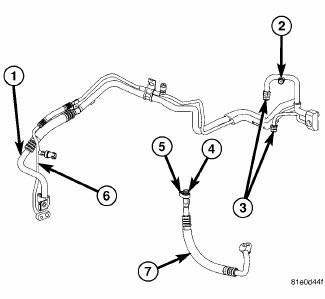
Fig. 253: Upper Suction/Liquid Line Assembly
NOTE: A/C Suction line for 2.7L engine shown. Other engines similar.
The A/C suction line carries refrigerant from the A/C expansion valve to the A/C compressor and is serviced in two sections. The upper section of the A/C suction line (1) includes the low side service port (2) and is only serviced as an assembly with the rear A/C liquid line (6). When equipped with rear A/C, the A/C liquid and suction line assembly includes connections for the underbody refrigerant lines (3). The lower section of the A/C suction line (7) connects to the upper section of the suction line and the connections are sealed by use of metal gaskets (5) and rubber O-ring seals (4)
NOTE: Replacement of the refrigerant line O-ring seals and gaskets is required anytime a refrigerant line is disconnected. Failure to replace the rubber O-ring seals and metal gaskets could result in a refrigerant system leak.
The lower A/C suction line and the A/C liquid and suction line assembly has no serviceable parts except for the metal gaskets, rubber O-ring seals and the service port valve cores. The O-ring seals used on the connections are made from a special type of rubber not affected by R-134a refrigerant. The O-ring seals and gaskets must be replaced whenever the lower A/C suction line and/or the A/C liquid and suction line assembly is disconnected.
The lower A/C suction line and the A/C liquid and suction line assembly cannot be repaired and must be replaced if leaking or damaged.

 Removal
WARNING: Review safety precautions and warnings in this part
before performing
this procedure. See Heating and Air Conditioning/Plumbing - Warning
and. Failure to
follow the warnin ...
See also:
TIRE ROTATION RECOMMENDATIONS
Tires on the front and rear axles of vehicles operate at
different loads and perform different steering, driving,
and braking functions. For these reasons, they wear at
unequal rates.
These effect ...
Resistor, blower motor, front
DESCRIPTION
Fig. 30: Blower Motor Resistor - Description
A blower motor resistor is used on vehicles equipped with the manual
temperature control (MTC) heating-A/C
system. Vehicles equipped wit ...
Description, Operation
DESCRIPTION
Fig. 272: Rear Heater Core Description
The rear heater core (1) is located in the rear heater-A/C housing behind the
right interior quarter trim panel.
The rear heater core is a h ...
