
Dodge Journey: Plug, glow
DESCRIPTION
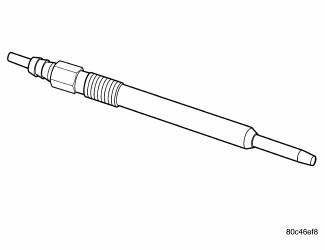
Fig. 26: Glow Plug
Glow plugs are used to help start a cold or cool engine. The glow plugs will heat up and glow to heat the combustion chamber of each cylinder. An individual glow plug is used for each cylinder. Each glow plug is threaded into the cylinder head below the cylinder head cover.
OPERATION
The glow plugs are used to preheat the combustion chambers in order to achieve the ignition temperature required for the fuel-air mixture.
The heating element is integrated in the glow rod. It consists of a heating winding and a control winding connected in series.
The glow plug system is a quick start type. This allows for immediate start in practically all weather conditions without long periods of preglowing. This works in conjunction with 6-hole injectors, which have a special "ignition" spray pattern. The glow plugs reach 1000º C (1832º F) in 2 seconds.
REMOVAL
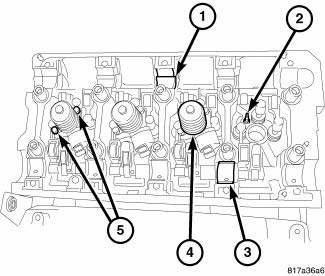
Fig. 27: Glow Plugs
NOTE: If replacing a one or more glow plugs that failed, check the glow plug relay control circuit (K202) for a short to voltage. Back probe circuit (K202) between the engine control module and the glow plug control module. Any reading higher than 9.8 volts with the key on would be considered a short to voltage.
1. Disconnect negative battery cable.
2. Remove engine cover.
3. Remove cylinder head cover.
4. Disconnect glow plug electrical connector.
5. Remove glow plugs (2) from cylinder head.
INSTALLATION
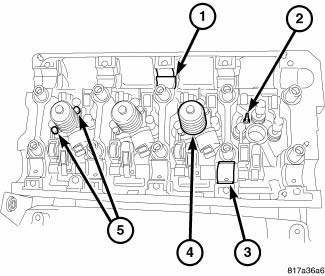
Fig. 28: Glow Plugs
1. Clean glow plug bay and install glow plug.
2. Tighten glow plugs to 10 N.m (89 lbs. in.).
3. Connect glow plug electrical connector.
4. Install cylinder head cover.
5. Install engine cover.
6. Connect negative battery cable.
 Module, glow plug
DESCRIPTION
Fig. 23: Locating Diesel Glow Plug Control Module
The glow plug control module is mounted to the fuel filter/water separator
bracket, and is controlled by the
engine control module. ...

See also:
Description
Fig. 1: Exterior Lighting System
The exterior lighting system for this vehicle includes the following exterior
lamp units:
Center High Mounted Stop Lamp (3) - A standard equipment Center High ...
Installation
DIESEL PARTICULATE FILTER
Fig. 12: Engine Support Bracket Bolts
1. Position the DPF and turbocharger gasket into the vehicle. Do not tighten
at this time
2. Tighten the three bolts (1) at the ...
Seal, oil pump
REMOVAL
Fig. 367: Removing Oil Pump Seal
- SEAL PULLER C-3981-B
- OIL PUMP SEAL
1. Remove transaxle from vehicle.
2. Using Seal Puller C-3981B (1) , remove oil pump seal (2).
INSTALLA ...
