
Dodge Journey: Operation, Removal
OPERATION
CAMSHAFT AND CRANKSHAFT SIGNALS
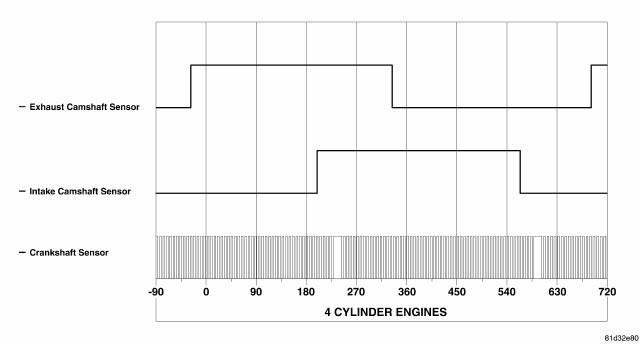
Fig. 29: 4 Cylinder Cam & Crank Signals
NOTE: The graphic represents the relationship between camshaft and crankshaft sensors edges with camshafts in "lock pin" position (cam shafts are not "phasing"). This is normally seen during idle.
Depiction of good camshaft and crankshaft square wave signals for 4 cylinder engines.
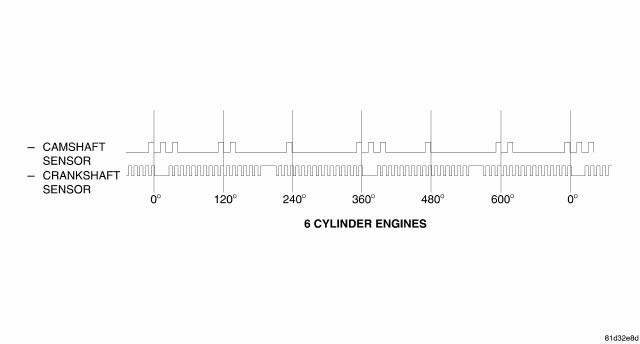
Fig. 30: 6 Cylinder Cam & Crank Signals
Depiction of good camshaft and crankshaft square wave signals for 6 cylinder engines.
REMOVAL
2.4L FRONT
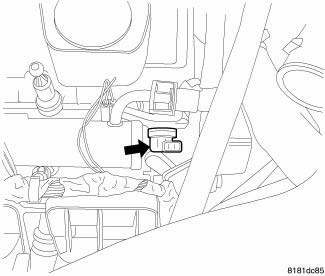
Fig. 31: Front Cam Sensor
1. Disconnect and isolate negative battery cable.
2. Disconnect electrical connector from camshaft position sensor.
3. Remove camshaft position sensor mounting screw.
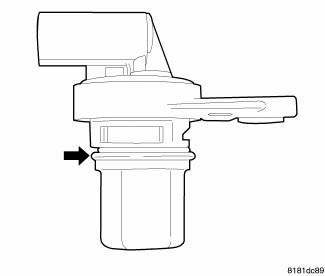
Fig. 32: Removing/Installing Camshaft Position Sensor
4. Remove sensor.
2.4L REAR
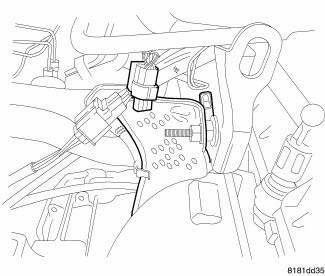
Fig. 33: Identifying Camshaft Position Sensor Heat Shield - Remove/Install
1. Disconnect and isolate negative battery cable.
2. Disconnect electrical connector at sensor.
3. Remove nut retaining heat shield.
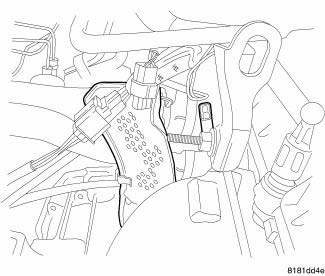
Fig. 34: Identifying Camshaft Position Sensor Heat Shield - Remove/Install
4. Pull heat shield out to uncover sensor.
5. Remove mounting bolt.
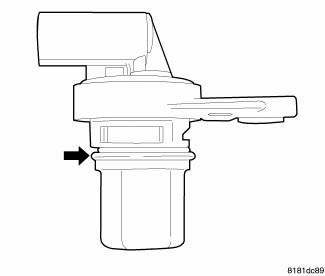
Fig. 35: Removing/Installing Camshaft Position Sensor
6. Remove sensor.
2.7L
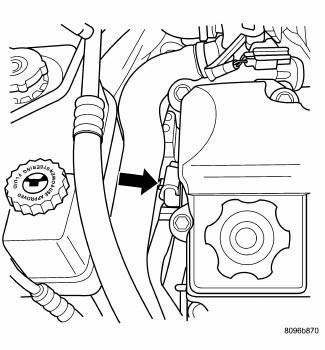
Fig. 36: Cam Sensor Location 2.7L
The camshaft position sensor is mounted in the front of the head.
1. Disconnect electrical connector from sensor.
2. Remove camshaft position sensor screw.
3. Without pulling on the connector, pull the sensor out of the chain case cover.
3.5L
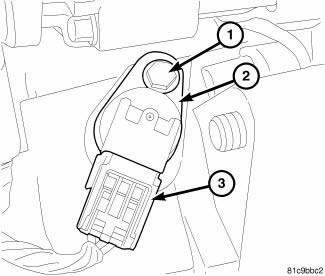
Fig. 37: 3.5L Camshaft Sensor
1. Disconnect and isolate the negative battery cable at battery.
2. Disconnect electrical connector (3) from camshaft position (CMP) sensor (2).
3. Remove bolt (1) and CMP sensor (2).

 Installation
2.4L FRONT
Fig. 38: Removing/Installing Camshaft Position Sensor
CAUTION: Install camshaft position (CMP) sensor utilizing twisting
motion. Make sure
CMP sensor is fully seated. Do n ...
See also:
Diagnosis and testing
ON-BOARD DIAGNOSTIC SYSTEM
The Powertrain Control Module (PCM) monitors critical input and output
circuits of the charging system,
making sure they are operational. A Diagnostic Trouble Code (DTC) ...
Diagnosis and testing
COMMON PROBLEM CAUSES
The majority of transaxle malfunctions are a result of:
Insufficient lubrication
Incorrect lubricant
Misassembled or damaged internal components
Improper operation
...
WINDSHIELD WIPERS AND WASHERS
The windshield wiper/washer control lever is located on
the right side of the steering column. The front wipers are
operated by rotating a switch, located at the end of the
lever. For information o ...
